 Zorg Space
Who has priority in the Netherlands? The rules in the order they apply
Short answer
Dutch priority works as a ladder. Directions from a police officer or traffic controller come first, then traffic lights, then signs and shark’s teeth, and only when none of those is present the general rules: traffic from the right goes first, a driver on an unpaved road gives way to one on a paved road, and everyone gives way to trams. Read the junction from the top of the ladder down and stop at the first thing that decides.
The ladder: what decides first
- A person directing trafficpolice, a traffic controller — overrules everything below
- Traffic lightsa green light still means: let pedestrians and straight-on traffic finish
- Signs and shark’s teeththey overrule the general rules
- The general rulesright before left, unpaved gives way to paved, trams first
The order matters in the exam. A question may show a junction with a give-way sign and a working traffic light: the light decides. If the light is off or flashing yellow, you fall back to the signs.
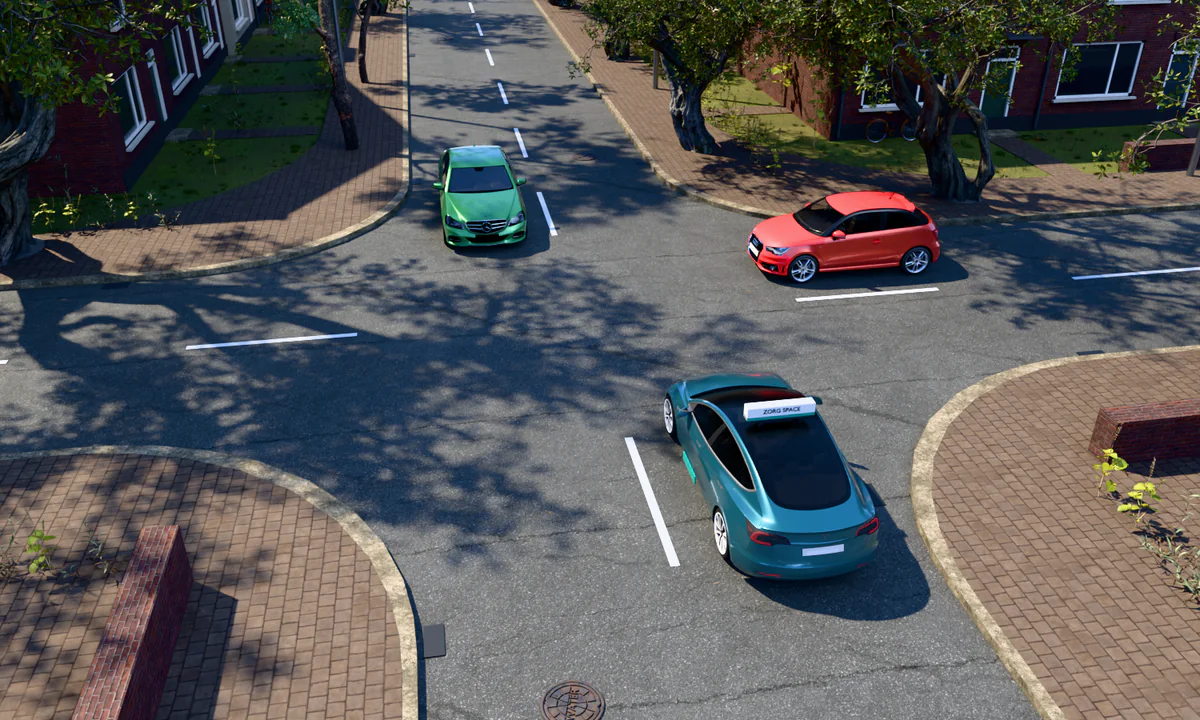
Equal junctions: traffic from the right first
At a junction without signs, markings or lights, every driver gives way to drivers approaching from the right (RVV 1990, article 15). “Drivers” includes cyclists and moped riders: a cyclist coming from your right at an equal junction goes first.
The same article has two exceptions that the exam likes:
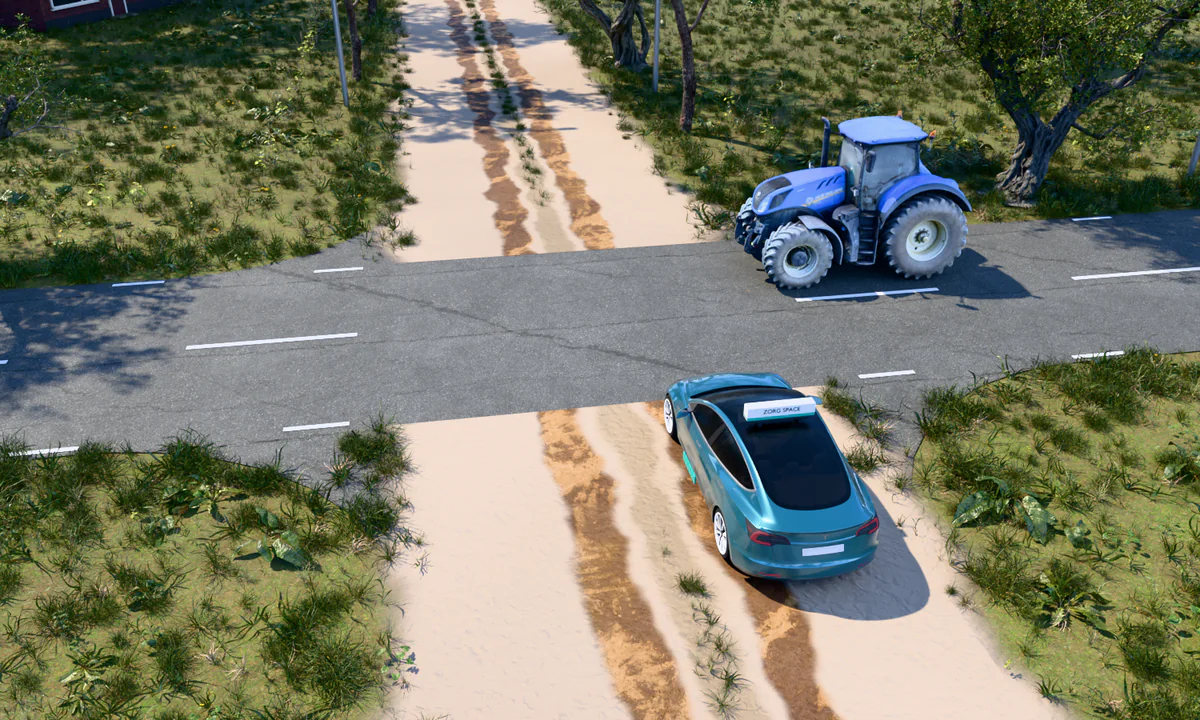
- A driver on an unpaved road gives way to drivers on a paved road, from any side.
- Trams go first, from whichever side they come.
Shark’s teeth and give-way signs
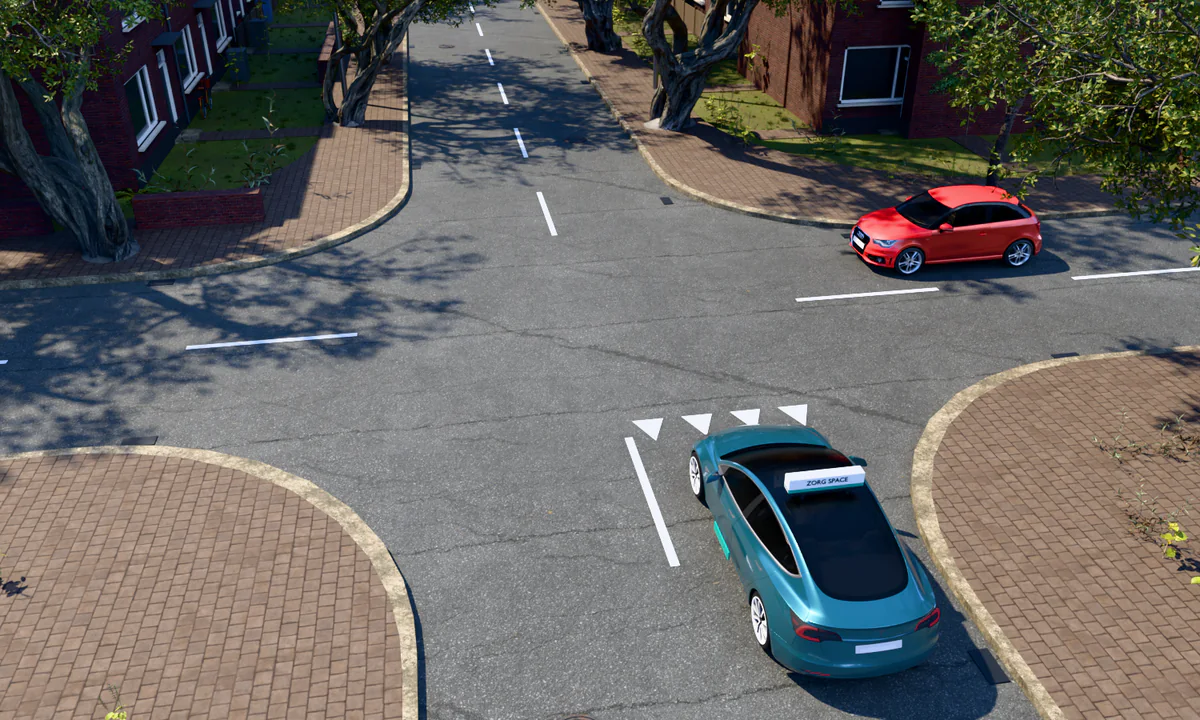
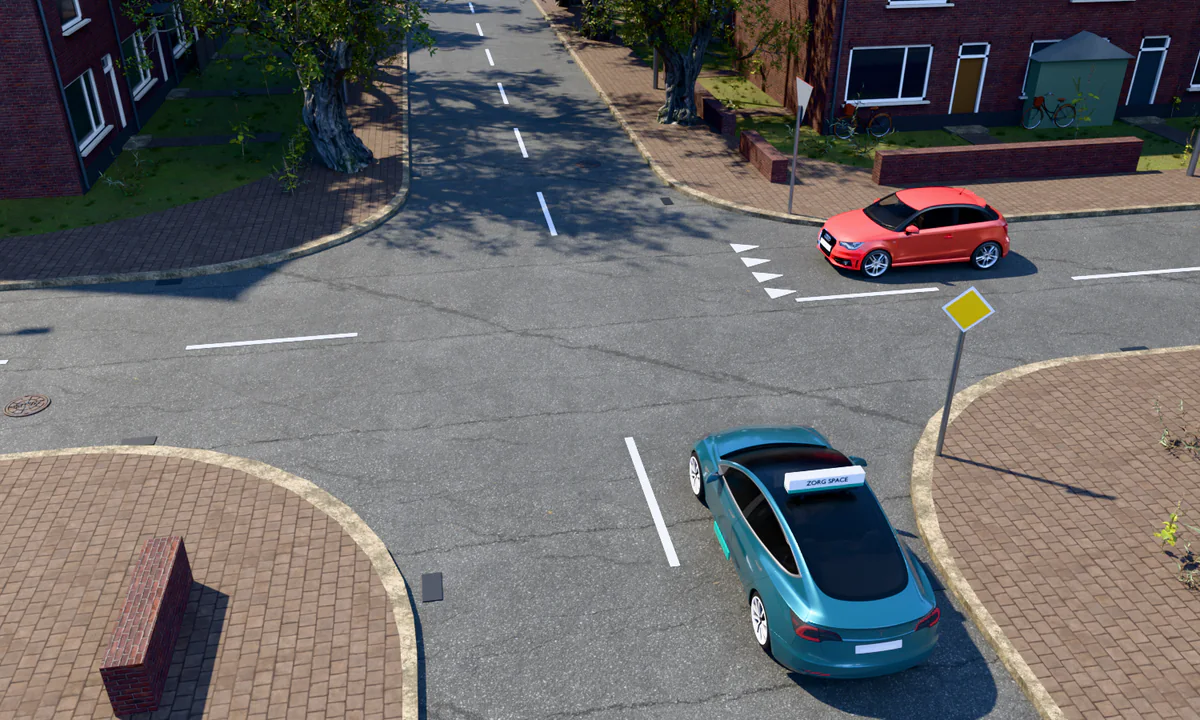
A row of white triangles across your lane — shark’s teeth — means you give way to drivers on the crossing road, from both directions (article 80). They usually stand together with a give-way sign, but the markings alone are enough.
-
 B6Give way to drivers on the crossing roadUsually with shark’s teeth.
-
 B7Stop, then give wayYou stop at the stop line, even on an empty road.
-
 B1Priority roadYou have priority at the junctions along this road.
-
 B2End of priority roadFrom here the junctions are no longer covered.
-
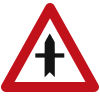 B3Priority junction aheadThe road you are on has priority at the next junction.
Priority roads
On a road marked with the yellow diamond (B1) you have priority at junctions; side roads show shark’s teeth or a give-way sign. That priority ends at the B2 sign. A priority road does not give you priority over a pedestrian on a zebra crossing, and when you turn off it you still let traffic going straight on, such as cyclists beside you, go first.
Turning, pedestrians and trams
- Turning: when you turn, you let traffic that goes straight on along the same road go first — including cyclists on a cycle path or cycle lane beside you (article 18). Turning left, you also give way to oncoming traffic that turns right.
- Zebra crossings: pedestrians on, or clearly about to step onto, a zebra crossing go first (article 49).
- Leaving a driveway or a residential zone (erf): that is a special manoeuvre, and you give way to all other traffic.
Check yourself
Tap an answer to check it. Nothing is saved or sent.
-
1You are the learner car on the sandy track. Who goes first?
- You, because the tractor comes from the right
- You, because you are a car and the tractor is slow
- The tractor, because it is on the paved road
Show answer
Answer: C The tractor, because it is on the paved road
A driver on an unpaved road gives way to drivers on a paved road, from either side (RVV 1990, article 15).
-
2A traffic light is green for you, and there is also a give-way sign. What decides?
- The car coming from the right
- The give-way sign
- The traffic light
Show answer
Answer: C The traffic light
Traffic lights rank above signs (articles 64 and 63). With green you may go; if you turn, you still let pedestrians and cyclists who go straight on with their own green go first.
-
3You turn right. A cyclist on the cycle path beside you goes straight on. Who goes first?
- Whoever reaches the junction first
- The cyclist
- You, because you signalled
Show answer
Answer: B The cyclist
A driver who turns gives way to traffic going straight on along the same road, cyclists on the cycle path included (article 18).
Sources
Related guides
-
 Rules of the road
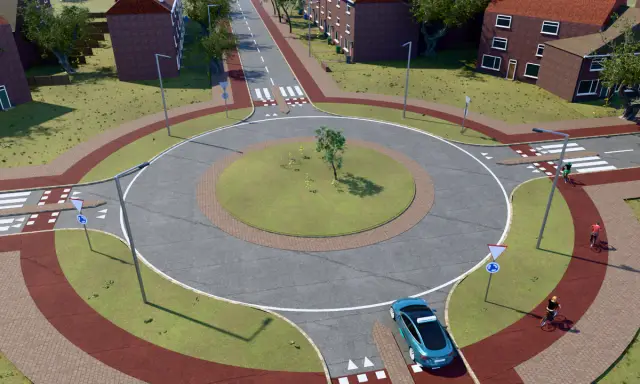
Roundabouts in the Netherlands: who goes first, and when to indicate
A Dutch roundabout gives no priority by its shape. How to read the entry, when to indicate, cyclists on the ring and turbo roundabouts. 4 min read -
 The theory exam
How does the Dutch car theory exam work?
The CBR car theory exam since April 2025: 50 questions that count, 44 to pass, 30 minutes, the question types, and how to prepare for it. 5 min read -
 Rules of the road
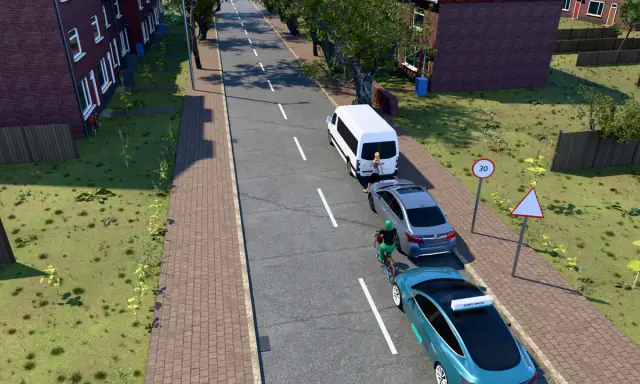
Speed limits in the Netherlands in 2026: 15, 30, 50, 80, 100 or 130?
The Dutch speed limits by road type, why motorways show 100 by day, where 130 is allowed in daytime since 2025, and when the sign is not the real limit. 4 min read
Practising for the theory exam?
Zorg Space has a complete Theorie B course in English, Dutch and Arabic: 42 lessons, practice questions for every topic and 22 full mock exams in the current format (50 questions in 30 minutes). It is free with an account.
Open Zorg SpaceZorg Space is not part of, or a partner of, the CBR. The rules in these guides were checked on the date shown; laws change, so cbr.nl and wetten.overheid.nl always have the final word.