 Zorg Space
Roundabouts in the Netherlands: who goes first, and when to indicate
Short answer
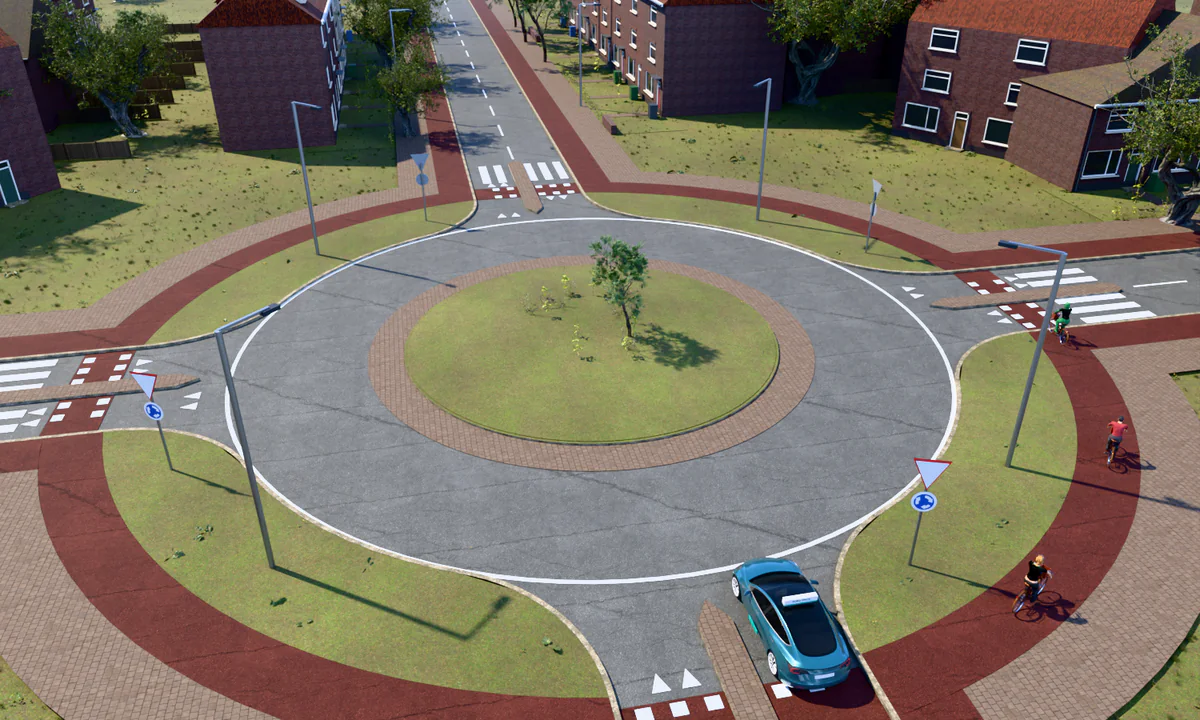
There is no special priority rule for roundabouts in Dutch law. A roundabout is a junction, and the signs and shark’s teeth at the entry decide. On almost every Dutch roundabout the entries carry shark’s teeth and a give-way sign, so traffic already on the ring goes first. Without them, it is an ordinary equal junction and traffic from the right — the traffic entering — would go first.
Read the entry, not the shape
-
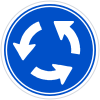 D1Roundabout: drive in the direction of the arrowsIt tells you the direction of travel. It says nothing about priority.
-
 B6Give way to drivers on the crossing roadAt a roundabout entry: give way to traffic on the ring.
The blue roundabout sign only says which way round to drive. The priority comes from the triangle and the teeth beneath it. That is why the exam sometimes shows a roundabout without teeth: then the right-hand rule applies, and the car on the ring has to let an entering car from its right go first.
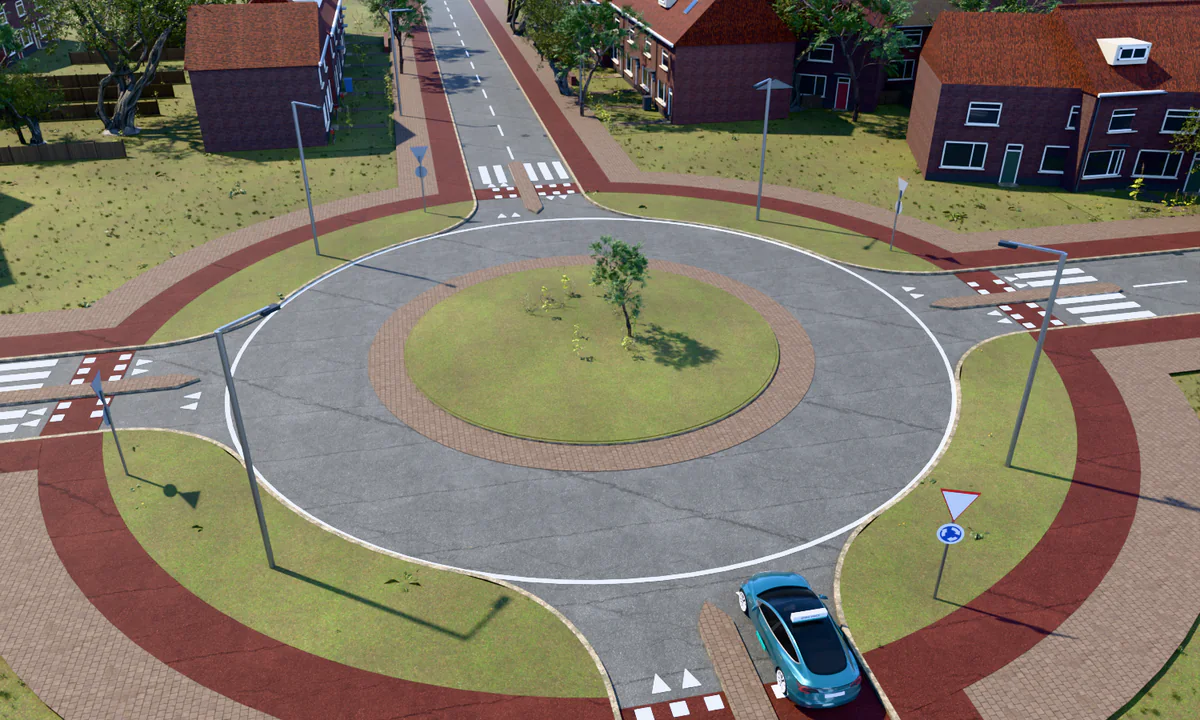
Wait in front of the teeth until there is a real gap. Edging halfway onto the ring blocks the lane of the driver who has priority.
When to indicate
- First exitindicate right as you enter
- Straight onnothing as you enter; indicate right just before your exit
- Exit on the far sideindicate left as you enter, then right before your exit
Indicating right before your exit is what tells the drivers waiting at that exit that you are leaving, so they can go. Forgetting it keeps people waiting for no reason — and in the practical exam it is a classic fault.
Cyclists on the ring
Many roundabouts have a separate cycle path around them. Whether cyclists on that path go first when you leave or enter differs per roundabout: it is shown by the shark’s teeth at the cycle crossing. Inside built-up areas cyclists usually have priority on the ring path; outside them often not. Look at the markings every time instead of relying on a habit.
Two habits that change on a roundabout
On and just before a roundabout, two everyday rules are relaxed: you do not have to keep to the right of the carriageway (article 47), and overtaking on the right is allowed there (article 48). Both apply only on and just before the roundabout itself.
Two lanes and turbo roundabouts
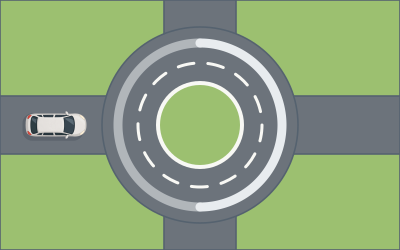
On a roundabout with two lanes, choose your lane before you enter, using the arrows on the road and the signs. On a turbo roundabout raised kerbs separate the lanes, so the choice is final: you cannot change lanes on the ring. If you are in the wrong lane, leave at the exit your lane leads to and turn round further on.
Check yourself
Tap an answer to check it. Nothing is saved or sent.
-
1A roundabout has no shark’s teeth and no give-way sign. A car wants to enter from your right while you are on the ring. Who goes first?
- The entering car, because it comes from your right
- You, because you are already on the roundabout
- Whoever is faster
Show answer
Answer: A The entering car, because it comes from your right
Without signs or teeth a roundabout is an equal junction: traffic from the right goes first (RVV 1990, article 15), even if that is the car entering.
-
2You take the first exit of a single-lane roundabout. When do you indicate?
- Not at all, the exit is right next to you
- Right, as you enter
- Left, as you enter
Show answer
Answer: B Right, as you enter
For the first exit you indicate right as you enter, so drivers waiting at that exit know you are leaving.
-
3You are in the wrong lane on a turbo roundabout. What do you do?
- Cross the raised divider carefully
- Leave at the exit your lane leads to and turn round later
- Stop on the ring and wait for a gap
Show answer
Answer: B Leave at the exit your lane leads to and turn round later
The raised dividers make lane changes on the ring impossible. Follow your lane out and correct your route afterwards.
Sources
Related guides
-
 Rules of the road
Who has priority in the Netherlands? The rules in the order they apply
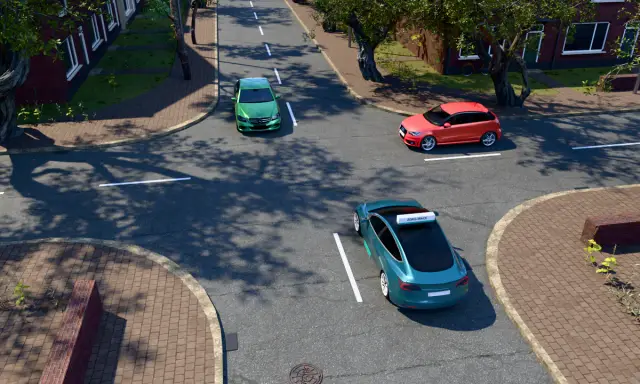
Right before left, shark’s teeth, priority roads, trams and turning traffic — the Dutch priority rules in the order they apply, with pictures. 4 min read -
 Rules of the road
Speed limits in the Netherlands in 2026: 15, 30, 50, 80, 100 or 130?
The Dutch speed limits by road type, why motorways show 100 by day, where 130 is allowed in daytime since 2025, and when the sign is not the real limit. 4 min read -
 The theory exam
How does the Dutch car theory exam work?
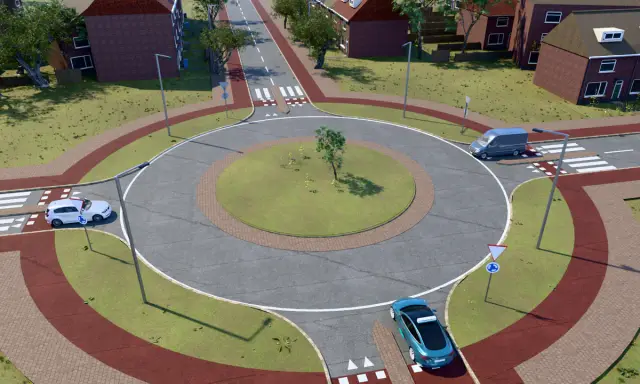
The CBR car theory exam since April 2025: 50 questions that count, 44 to pass, 30 minutes, the question types, and how to prepare for it. 5 min read
Practising for the theory exam?
Zorg Space has a complete Theorie B course in English, Dutch and Arabic: 42 lessons, practice questions for every topic and 22 full mock exams in the current format (50 questions in 30 minutes). It is free with an account.
Open Zorg SpaceZorg Space is not part of, or a partner of, the CBR. The rules in these guides were checked on the date shown; laws change, so cbr.nl and wetten.overheid.nl always have the final word.